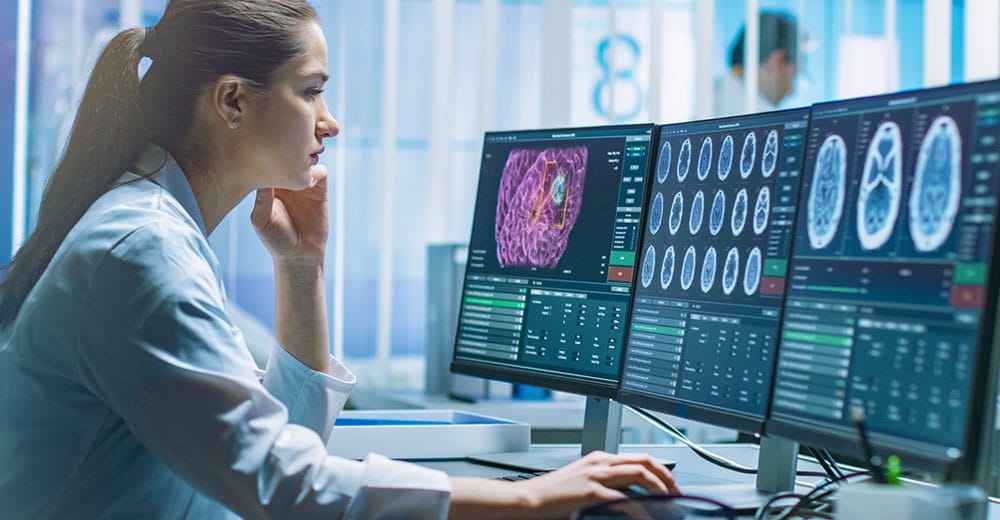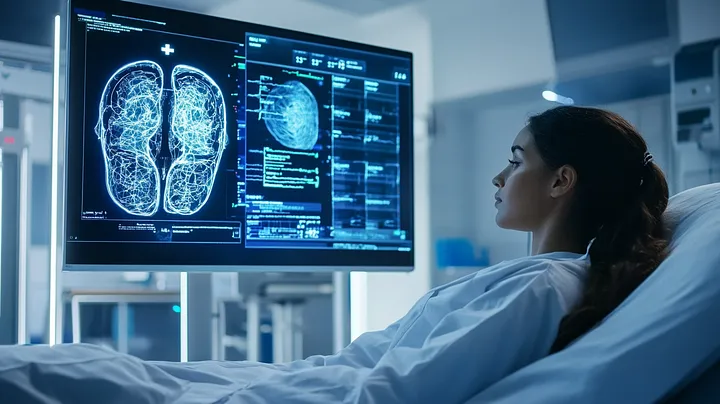
Artificial intelligence is no longer a futuristic concept confined to science fiction movies. It has quietly become one of the most powerful forces reshaping modern healthcare. Across hospitals, research laboratories, pharmacies, and even people’s homes, AI is helping doctors detect diseases earlier, supporting nurses in caring for patients, accelerating the discovery of new medicines, and making healthcare more personalized than ever before.
Only a decade ago, many experts believed that AI would mainly automate repetitive administrative tasks. Today, the reality is far more remarkable. Advanced AI systems can analyze medical images in seconds, identify subtle disease patterns that may be difficult for humans to notice, predict which patients are at greater risk of complications, assist surgeons during complex operations, and help scientists design promising drug candidates in a fraction of the time traditional methods require.
Despite these extraordinary advances, AI is not replacing doctors. Instead, it is becoming an intelligent partner that helps healthcare professionals make better decisions, reduce errors, and spend more time focusing on what matters most—the patient.
As healthcare systems worldwide face growing populations, aging societies, increasing chronic diseases, and rising medical costs, artificial intelligence offers powerful new tools to improve efficiency, expand access to care, and save lives. Yet the technology also raises important questions about privacy, fairness, transparency, and ethics that society must carefully address.
Understanding how AI is transforming healthcare helps us appreciate not only the incredible possibilities ahead but also the responsibility that comes with using such powerful technology wisely.
What Is Artificial Intelligence?
Artificial intelligence, often shortened to AI, refers to computer systems designed to perform tasks that normally require human intelligence. These tasks include recognizing images, understanding language, learning from experience, making predictions, solving problems, and identifying patterns within enormous amounts of information.
Unlike traditional computer programs that follow fixed instructions, many modern AI systems improve their performance by learning from data. This approach, known as machine learning, enables computers to discover relationships and patterns without being explicitly programmed for every possible situation.
An even more advanced form of AI, called deep learning, uses networks inspired by the human brain to analyze extremely complex data. Deep learning has become especially valuable in healthcare because it can recognize subtle features in medical images, laboratory results, genetic information, and electronic health records.
Rather than replacing human expertise, AI provides additional insights that help clinicians make more informed decisions.
Why Healthcare Needs AI
Healthcare is one of the most complex industries in the world.
Every patient is unique.
Every disease behaves differently.
Every treatment carries potential benefits and risks.
Doctors must constantly process enormous amounts of information while making decisions that can profoundly affect human lives.
At the same time, healthcare systems face increasing pressure.
People are living longer than ever before, resulting in larger populations with chronic illnesses such as diabetes, heart disease, arthritis, and cancer.
Medical knowledge is expanding at an extraordinary pace. Thousands of scientific studies are published every week, making it impossible for any individual physician to keep up with every new discovery.
Hospitals also generate massive amounts of digital information through laboratory tests, medical imaging, wearable devices, prescriptions, electronic health records, and monitoring equipment.
AI excels at analyzing large datasets quickly and identifying meaningful patterns that humans might overlook.
This ability makes it an ideal partner for modern healthcare.
The Evolution of AI in Medicine
The relationship between artificial intelligence and medicine did not begin recently.
Researchers started exploring computer-assisted diagnosis as early as the 1960s.
Early systems relied on manually programmed rules.
These programs could answer medical questions only within very limited areas and often struggled with real-world complexity.
The rapid growth of computing power, digital medical records, cloud computing, and machine learning transformed the field.
The availability of enormous healthcare datasets allowed AI systems to learn directly from millions of medical cases.
Deep learning further accelerated progress by dramatically improving image recognition, language processing, and predictive modeling.
Today, AI supports nearly every area of healthcare, from prevention and diagnosis to treatment, research, administration, and public health.
AI and Medical Diagnosis
One of AI’s most important contributions is improving medical diagnosis.
Diagnosing disease often resembles solving a complicated puzzle.
Doctors combine symptoms, physical examinations, laboratory tests, imaging studies, medical history, and clinical experience to determine the most likely explanation.
AI can analyze these diverse sources of information simultaneously.
Instead of replacing clinical judgment, it provides additional evidence that may increase diagnostic accuracy.
This is especially valuable when diseases produce subtle or overlapping symptoms.
Earlier diagnosis often leads to earlier treatment, better outcomes, and lower healthcare costs.
Detecting Disease Through Medical Imaging
Medical imaging has become one of AI’s greatest success stories.
Radiologists interpret enormous numbers of X-rays, CT scans, MRI scans, ultrasound images, and mammograms every day.
Even experienced specialists may occasionally miss tiny abnormalities, particularly when reviewing hundreds of images during busy shifts.
AI systems can rapidly examine these images and highlight suspicious regions for closer review.
Researchers have demonstrated impressive results in detecting lung nodules, breast cancer, diabetic eye disease, fractures, strokes, pneumonia, and several other conditions.
Importantly, AI is designed to assist radiologists rather than replace them.
The combination of human expertise and AI support often produces better results than either working alone.
Fighting Cancer with Artificial Intelligence
Cancer treatment depends heavily on early detection.
The sooner many cancers are found, the greater the chance of successful treatment.
AI helps physicians identify cancers at earlier stages by recognizing patterns that may be difficult to detect visually.
In breast cancer screening, AI can analyze mammograms and identify subtle abnormalities requiring further evaluation.
In skin cancer, AI systems trained on enormous image datasets can distinguish potentially dangerous moles from harmless ones with impressive accuracy under certain conditions.
Pathologists also benefit from AI.
Digital pathology allows tissue samples to be scanned into high-resolution images.
AI can examine millions of microscopic cells, measure tumor characteristics, estimate disease severity, and assist in identifying cancer types.
These tools help specialists work more efficiently while reducing the chance of overlooking important findings.
AI and Heart Disease
Heart disease remains one of the leading causes of death worldwide.
Artificial intelligence is helping improve cardiovascular care in several ways.
AI can analyze electrocardiograms to detect irregular heart rhythms.
It can examine echocardiograms to assess heart function.
It can estimate an individual’s future risk of heart attacks, heart failure, or stroke by analyzing medical histories, laboratory values, lifestyle factors, and imaging data.
Hospitals increasingly use predictive models to identify patients at risk of sudden deterioration, allowing medical teams to intervene earlier.
These early warnings may save lives by preventing emergencies before they occur.
AI in Neurology
The brain is extraordinarily complex, making neurological diagnosis particularly challenging.
AI is helping neurologists interpret brain scans, identify stroke more rapidly, detect early signs of Alzheimer’s disease, and monitor neurological disorders.
During strokes, every minute matters.
Some hospitals now use AI systems that immediately analyze brain scans after imaging is completed.
If a blocked blood vessel is detected, specialists receive rapid alerts, helping patients receive treatment sooner.
Researchers are also investigating whether AI can recognize subtle speech changes, movement abnormalities, or cognitive patterns that indicate neurological diseases before symptoms become obvious.
Helping Diagnose Rare Diseases
Rare diseases present unique challenges.
Many physicians encounter certain rare disorders only once or twice during their careers.
As a result, diagnosis may take years.
AI can compare a patient’s symptoms, laboratory results, imaging findings, and genetic information with vast medical databases containing thousands of rare conditions.
Although these systems do not make final diagnoses, they can suggest possibilities that clinicians might otherwise overlook.
Earlier diagnosis can reduce unnecessary testing and help patients receive appropriate treatment sooner.
Personalized Medicine
Traditional medicine often treats patients with similar diagnoses using similar therapies.
However, individuals respond differently to treatment.
Genetics, lifestyle, age, environment, and other factors influence how each person’s body reacts.
AI is helping healthcare move toward personalized medicine.
Instead of recommending identical treatments for everyone, AI analyzes patient-specific information to estimate which therapies are most likely to succeed.
Cancer treatment illustrates this approach particularly well.
Tumors that appear similar under a microscope may possess different genetic mutations requiring different medications.
AI helps interpret these complex genetic profiles, allowing doctors to choose more targeted therapies.
Accelerating Drug Discovery
Developing new medicines is incredibly expensive and time-consuming.
It often takes more than a decade to bring a new drug from the laboratory to patients.
Researchers must identify promising molecules, test them extensively, conduct multiple clinical trial phases, and demonstrate safety and effectiveness.
AI is helping accelerate several stages of this process.
Machine learning models can examine enormous chemical libraries to predict which molecules might interact with specific biological targets.
Instead of experimentally testing millions of compounds, scientists can focus on the most promising candidates.
AI also helps researchers predict toxicity, optimize molecular structures, and identify existing drugs that might be useful for treating new diseases.
Although human expertise remains essential, AI is making drug development faster and more efficient.
AI During the COVID-19 Pandemic
The COVID-19 pandemic highlighted both the strengths and limitations of artificial intelligence.
Researchers used AI to analyze viral genomes, study disease spread, identify potential drug candidates, assist vaccine research, and predict hospital resource needs.
Hospitals applied AI to monitor patient deterioration, optimize intensive care resources, and analyze medical images.
Although some early AI applications did not perform as well as initially hoped, the pandemic demonstrated how rapidly AI tools can be developed when combined with global scientific collaboration.
It also emphasized the importance of using high-quality data and rigorous clinical validation.
Virtual Health Assistants
Millions of people now interact with AI-powered health assistants through smartphones and computers.
These systems answer general health questions, remind patients to take medications, schedule appointments, monitor symptoms, and provide educational information.
Some AI chatbots help patients determine whether symptoms require emergency care, urgent evaluation, or routine medical appointments.
These tools cannot replace physicians and should not provide definitive diagnoses, but they improve access to basic health information and encourage people to seek appropriate care when necessary.
Remote Patient Monitoring
Healthcare is increasingly moving beyond hospital walls.
Wearable devices measure heart rate, physical activity, sleep quality, blood oxygen levels, and other health indicators.
Some medical devices continuously monitor blood glucose, heart rhythms, or blood pressure.
AI analyzes these streams of information in real time.
Instead of waiting until patients become seriously ill, AI can identify concerning trends early.
Doctors may receive alerts if a patient’s condition begins deteriorating, allowing intervention before hospitalization becomes necessary.
This approach is especially valuable for chronic diseases requiring long-term management.
AI in Surgery
Modern surgery has become increasingly precise thanks to advanced technology.
Artificial intelligence now provides additional support before, during, and after operations.
Before surgery, AI helps surgeons analyze medical images, identify important anatomical structures, and plan procedures more accurately.
During surgery, AI-assisted robotic systems improve precision, stability, and visualization.
These systems remain fully controlled by surgeons.
They do not independently perform operations.
Instead, they help reduce hand tremors, improve instrument control, and enable minimally invasive procedures.
After surgery, AI monitors recovery data and predicts patients at higher risk for complications.
Electronic Health Records
Hospitals generate enormous amounts of documentation.
Doctors often spend significant time entering information into electronic health records.
AI helps reduce this administrative burden.
Natural language processing allows computers to understand medical text.
AI can summarize patient histories, organize clinical notes, extract relevant information, and assist documentation.
This reduces repetitive tasks, allowing healthcare professionals to spend more time interacting directly with patients.
Reducing Medical Errors
Healthcare professionals work in demanding environments where fatigue, heavy workloads, and complex cases increase the risk of human error.
AI helps reduce these risks by providing decision support.
For example, AI can identify potentially dangerous drug interactions before medications are prescribed.
It can alert clinicians if laboratory results suggest severe illness.
It can flag unusual combinations of symptoms requiring further investigation.
These systems function as safety nets that complement, rather than replace, clinical judgment.
AI in Intensive Care Units
Patients in intensive care generate enormous quantities of information every second.
Heart rate.
Blood pressure.
Oxygen levels.
Breathing patterns.
Laboratory values.
Medication responses.
No human can continuously analyze every piece of data simultaneously.
AI systems monitor these complex streams, recognizing patterns associated with worsening conditions.
Early warnings allow doctors and nurses to intervene before life-threatening complications develop.
Mental Health and AI
Mental healthcare represents another rapidly growing area of AI research.
AI tools analyze speech, writing patterns, facial expressions, smartphone usage, and other behavioral indicators that may reflect changes in mental health.
Some digital therapy applications provide cognitive behavioral therapy exercises between clinical appointments.
Others monitor mood over time and encourage individuals to seek professional help if concerning patterns emerge.
These technologies are designed to supplement mental healthcare professionals rather than replace therapists or psychiatrists.
Human empathy remains irreplaceable.
AI in Medical Research
Scientific research generates enormous amounts of data.
Researchers must analyze genetic information, laboratory experiments, medical literature, and clinical trial results.
AI dramatically accelerates this process.
Machine learning identifies hidden relationships within massive datasets.
Natural language processing helps scientists review thousands of research papers more efficiently.
AI can even generate hypotheses suggesting new directions for investigation.
By reducing routine analytical work, researchers can devote more time to designing experiments and interpreting discoveries.
Genomics and Precision Healthcare
Sequencing a person’s genome produces billions of pieces of genetic information.
Analyzing such complex datasets manually is nearly impossible.
AI helps identify genetic variations associated with disease risk, treatment response, and inherited disorders.
Doctors increasingly use genomic information when selecting cancer therapies, diagnosing rare diseases, and estimating disease susceptibility.
As sequencing becomes more affordable, AI will play an even larger role in interpreting genetic information for clinical care.
Public Health Applications
Artificial intelligence also supports healthcare beyond individual patients.
Public health organizations use AI to monitor disease outbreaks, predict influenza seasons, identify environmental health risks, and allocate healthcare resources.
Machine learning models analyze enormous datasets involving weather, travel, demographics, environmental conditions, and healthcare utilization.
These insights help governments prepare for future health emergencies and improve community health planning.
The Ethical Challenges of AI
Despite its remarkable promise, AI raises important ethical questions.
Healthcare decisions directly affect human lives.
Therefore, AI systems must be developed and used responsibly.
Patient privacy represents a major concern.
AI requires large amounts of medical data for training.
Protecting confidential health information is essential.
Bias presents another challenge.
If training data do not adequately represent diverse populations, AI systems may perform less accurately for certain groups.
Researchers work continuously to improve fairness and reduce disparities.
Transparency also matters.
Doctors and patients should understand why AI recommends specific decisions whenever possible.
Trust grows when technology is understandable rather than mysterious.
Can AI Replace Doctors?
This question appears frequently whenever AI advances.
The short answer is no.
Healthcare involves much more than recognizing patterns.
Doctors communicate difficult news.
They comfort frightened families.
They understand personal values.
They consider emotional, social, cultural, and ethical factors.
They make complex decisions when evidence is uncertain.
AI excels at processing information.
Humans excel at empathy, communication, creativity, and moral judgment.
The future of healthcare is not humans versus AI.
It is humans working with AI.
The strongest healthcare teams will combine advanced technology with compassionate medical professionals.
The Future of AI in Healthcare
Artificial intelligence is still evolving rapidly.
Future systems will likely become even better at predicting disease, personalizing treatments, interpreting genetic information, assisting surgeries, monitoring chronic conditions, and accelerating medical research.
Digital twins—computer models representing individual patients—may eventually allow doctors to simulate treatments before applying them.
Advanced wearable devices may continuously monitor health and detect disease before symptoms appear.
AI-assisted robotics could expand access to specialized surgery in underserved regions.
Researchers are also exploring multimodal AI capable of integrating medical images, laboratory data, genetics, clinical notes, and wearable sensor information into a unified understanding of each patient.
Although challenges remain, the pace of innovation continues accelerating.
A Human-Centered Future
Perhaps the most important lesson about AI in healthcare is that technology alone cannot heal people.
Machines process information.
People provide compassion.
Algorithms identify patterns.
Doctors build trust.
Computers calculate probabilities.
Families offer love and support.
The future of medicine depends not on choosing between humans and artificial intelligence but on combining the strengths of both.
When AI handles repetitive analysis, clinicians gain more time for meaningful conversations, careful listening, and personalized care.
In that sense, artificial intelligence has the potential not only to make medicine more advanced but also to make it more human.
Conclusion
Artificial intelligence is transforming healthcare in ways that were once difficult to imagine. From detecting diseases earlier and helping doctors interpret complex medical images to accelerating drug discovery, supporting personalized treatments, improving hospital efficiency, and expanding access to healthcare, AI has become one of the most influential technologies in modern medicine. Its ability to analyze vast amounts of information quickly and accurately is helping healthcare professionals make better-informed decisions and improve patient outcomes across many medical specialties.
At the same time, AI is not a replacement for doctors, nurses, or other healthcare professionals. Medicine is built on trust, compassion, communication, and ethical judgment—qualities that technology cannot replicate. The most effective healthcare systems of the future will combine the analytical power of artificial intelligence with the experience, empathy, and critical thinking of skilled medical teams.
As research continues and technology advances, AI will almost certainly play an even greater role in preventing disease, diagnosing illness, developing new therapies, and delivering more personalized care. However, its success will depend on careful oversight, high-quality data, patient privacy, fairness, and responsible use. When guided by these principles, artificial intelligence has the potential to improve millions of lives and help create a future where healthcare is not only smarter and faster but also more accessible, more precise, and ultimately more focused on the well-being of every patient.